
(971)235-3693

SWR Pack List
Paddle Craft
Request a boat on your registration form or bring your own Paddle Craft capable of executing rescues and carrying all your own safety gear:
• Whitewater kayak, IK, SOT, SUP, or canoe appropriate for class III whitewater
• Multi Chamber Whitewater Raft- Hypalon, Urethane or PVC (no Sevylor style Vinyl)

Required PPE
Required Personal Protective Equipment (PPE):
• Helmet
• USCG approved Personal Flotation Device (PFD)
• Safety whistle
• River Knife
• Throw rope
• Dry suit or full body wetsuit
• Closed toe water shoes with sturdy non slip soles
• Appropriate layers for wading and swimming in the river

Personal items
Personal:
• Lunches for each day
• Water bottle
• Snacks
• Paperwork and payment if any balance remains
The website charges a $100 deposit upon booking, the remainder of course fees should be paid in person when you check in the morning class begins.

Specialty gear for your craft
Paddling Equipment appropriate to craft:
• Paddle/Oars & spare
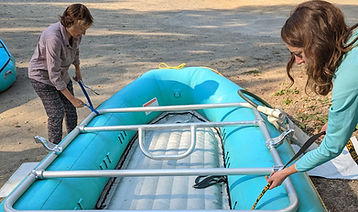
• Tool for adjustable raft frame
(allen key or ½ inch socket wrench)
• Spray skirt/ Float bags (Kayaks or Canoes)
• Tow system/ cow tail or SUP leash
Pin kit
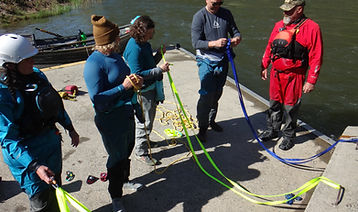
NNWW Provides pin kits to practice with. We do recommend you bring your own if you have one, in order to test that all your gear works together and to practice with the gear your will actually be using.
Rescue equipment (Pin kit example 4, 3, 2, 1):
• 4- Locking carabiners
• 3- Pullies
• 2- 5 to 7 mm accessory cord or prusiks
• 1- 15 to 20 feet of 1’’ tubular webbing
• 1 rescue rope, 150 to 200 feet of non stretch 3/8 inch to ½ inch rope, floating preferred
Suggested
-
Gloves, pogies or rowgies – neoprene or wool
-
Neoprene or wool hat/hood
-
Hand warmers
-
Hot beverage in a thermos
-
Nose plugs (kayakers)
-
Spare contact lenses
-
Eyeglasses/Sunglasses retainers
-
Personal medications (e.g., inhaler, EpiPen)
-
Extra set of warm, dry clothes for takeout
-
On-the-water note-taking materials (e.g., waterproof notebook, waterproof pens)


Wetsuit vs drysuit? Dressing for being in the cold water all day
For Swiftwater Rescue Courses, NNWW recommends drysuites. Drysuites must have appropriate layering underneath.
A wet suite is acceptable so long as it is thick and full body. Consider a wind barrier over the wetsuit to slow evaporative cooling.
Base: Long underwear or union suit base layer made of polartec type fleece, or smartwool type wool, top and bottom. Look for a fuzzy texture against skin that will provide loft. Avoid thin polypro, it doesn’t add much warmth, especially not when wet. The base layer should fit tight against your skin but not bind in the shoulders or knees when exercising.
Mid: For bottom, heavy weight fleece layer or synthetic puffy pants. Look for elastic waist. Add a puffy vest for your core if you get cold easily. If your base layer is smooth on the outside, you can add a mid weight fleece layer to your top here. If your base lay is fleecy on the outside, skip to a puffy jacket next because the two fleecy layers will bind and bunch up against each other.
Outer: In cold weather, add a third layer up top. Synthetic puffy jacket or wool/cashmere sweater. Avoid old school thick knitted wool as the bulkiness will make it hard to swim. Avoid hoods on the puffy jacket if possible, it can interfere with neck gasket and pfd fitting. Look for cashmere at thrift stores.
Leaky drysuites: Even if your drysuit does not leak, during a swiftwater rescue class we can still get damp when water gets in the gaskets from swiftwater entry etc. You might even get sweaty. Please do not wear cotton, like T shirts or jeans. If you choose to wear a down vest or down jacket, be advised it does not work when wet, so you will want to pair it with a wool sweater on top to create a dampness barrier. Synthetic down is better. Wool and neoprene are the only materials that are “warm” when wet. If your drysuit leaks a lot, consider wearing a neoprene base layer, like the NRS hydroskin, under your fleece layer.
Lastly, our feet and hands are going to get cold, there is no way around that in this setting. You can throw in hand warmers, but they will only work in dry pockets.
Feet: I always wear a thin wool sock, then the drysuit “sock” then a neoprene sock to protect my drysuit from sand and gravel in my shoe. To fit all those layers, I bought a shoe that is one size up, and took the insoles out. I like a trail running, canyoneering, approach, or mountain biking shoe with ankle protection personally. I find the neoprene boots or booties sold for watersports to have slippery and thin soles that are appropriate for hardshell kayaking but not much else. There are some water shoes out there made by Astral, Teva, & Chaco as well, but if you get those try to choose ones that will keep rocks and sand out. Do not wear boots that will trap water like Bogs or Xtratuffs. Avoid shoes that can easily fall off while swimming.
Hands: nothing beats pogies for warmth. You can place a pogie on the shaft of a T grip paddle or on kayak paddles. Mittens are warmer than gloves for the upper hand on the T grip. You can now find rowgies for rowing too! If you don’t use neoprene, choose a wool fingerless glove for affordability and dexterity. Consider where you will stash your mittens if you are taking them on and off all the time.